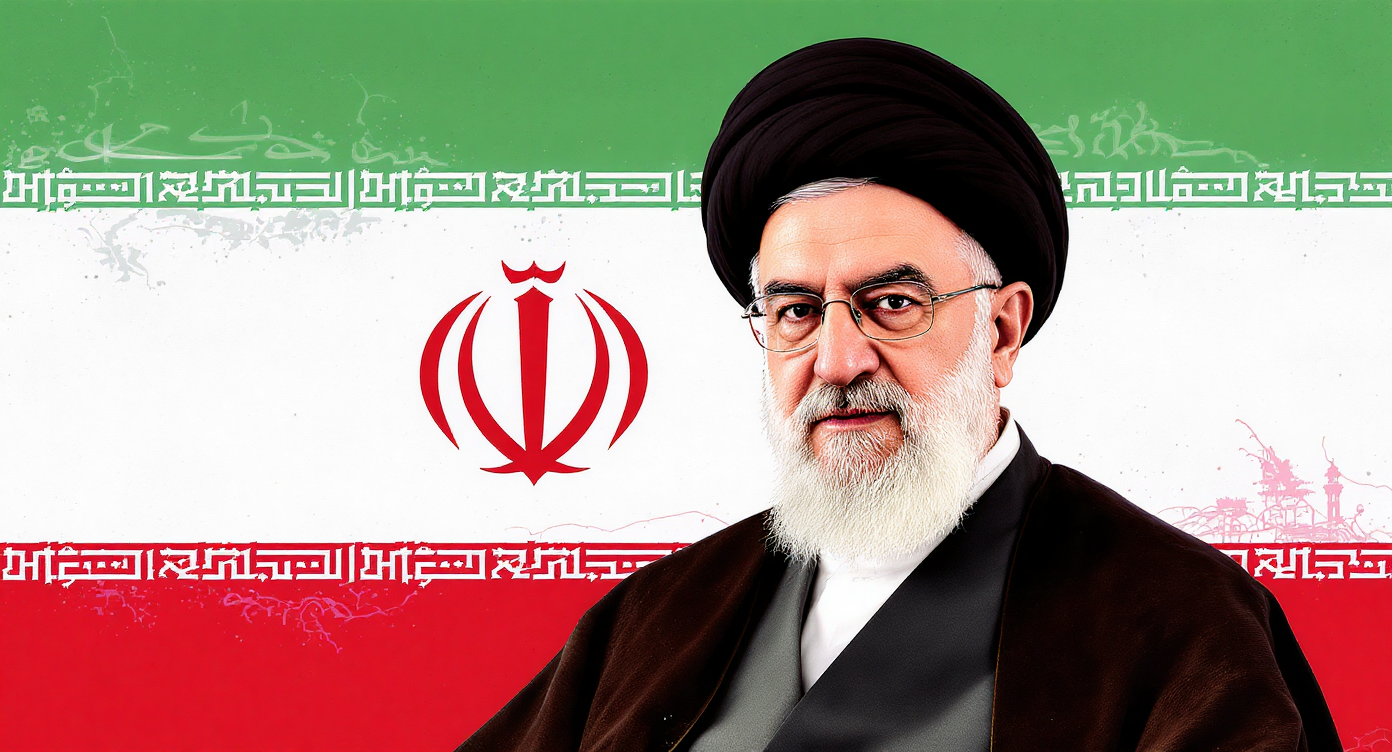
Ayatollah Ali Khamenei has been Iran’s Supreme Leader since 1989, making him one of Middle Eastern politics’ most powerful and enduring figures. As the successor to Ayatollah Ruhollah Khomeini, Khamenei holds ultimate authority over Iran’s government, military, judiciary, and foreign policy. While often seen as a religious scholar, his influence stretches far beyond the pulpit, shaping Iran’s stance on global affairs, regional conflicts, and internal reforms. His leadership has been marked by strict conservatism, anti-Western ideology, and unwavering support for the Islamic Revolution’s core values. Yet, he remains a deeply controversial figure revered by supporters and condemned by critics. This blog explores Khamenei’s rise, powers, influence, and the legacy he continues to build.
Early Life and Religious Background
Ali Hosseini Khamenei was born on July 17, 1939, in the city of Mashhad, among the holiest in Iran. Born into a family of religious scholars, Khamenei studied Islamic philosophy in his youth and climbed the clergy ranks of the Shia clerical education. He was taught by influential clerics, among them Ayatollah Ruhollah Khomeini, who led the 1979 Iranian Revolution.
Khamenei was a vocal opponent of the Shah’s government as a young cleric, for which he was arrested several times throughout the 1960s under SAVAK, the Shah’s secret police. His political work, religious writings, and allegiance with the revolution secured him a trusted position after overthrowing the Shah’s monarchy in Iran’s new Islamic order.
Rise to Political Power
Khamenei quickly ascended the political ranks after the 1979 revolution that turned Iran from a monarchy to an Islamic republic. He was President of the Council from 1981 to 1989, a period of tremendous turmoil in the country, such as the Iran–Iraq War.
After Ayatollah Khomeini died in 1989, Ayatollah Khamenei was named Supreme Leader, who holds supreme power over all government organs and the military and judiciary. His election was controversial in that Khamenehi was not a Marja’ (the highest rank in Shia clerical hierarchy), as traditionally required of a Supreme Leader. But it was changed, and he took power.
Role and Powers as Supreme Leader
Only Iran’s president is inferior to Khamenei as a supreme leader. The people elect the president, but the Supreme Leader is appointed by the Assembly of Experts, a council of clerics. Khamenei’s powers include:
- Commanding the armed forces, including the IRGC (Islamic Revolutionary Guard Corps)
- Appointing the head of the judiciary, key ministers, and military commanders
- Controlling state media and cultural institutions
- Vetoing laws and decisions from the president or parliament
- Guiding the country’s foreign policy, especially in areas like nuclear policy and relations with the West
Ideological Stance
Khamenei is a ferocious defender of the Islamic Revolution’s core tenets, including anti-Westernism, particularly toward the United States and Israel. He has often referred to the U.S. as the “Great Satan” and has stressed self-sufficiency, resistance to outside forces, and the export of the ideals of the revolution.
He is also a backer of the Velayat e-faqih, the idea that a supreme religious leader has authority over society to promote Islamic values. He has overseen a conservative cultural agenda and strict censorship, and has harshly treated critics and dissenters.
Foreign Policy and Global Influence
Under Khamenei’s leadership, Iran has expanded its regional influence significantly. Through alliances and proxy groups such as Hezbollah in Lebanon, the Assad regime in Syria, Shia militias in Iraq, and the Houthi movement in Yemen, Tehran has positioned itself as a key player in Middle Eastern geopolitics. These relationships serve Iran’s strategic interests by countering U.S. influence, deterring regional rivals like Saudi Arabia, and extending the ideological reach of the Islamic Revolution.
- Hezbollah in Lebanon
- The Assad regime in Syria
- Shia militias in Iraq
- The Houthis in Yemen
Iran has established itself as the dominant force in the Middle East. Khamenei has been the strategic inspiration for many of these adventures, especially his concept that what he calls a “resistance axis” is essential to combat Western dominance and defeat the likes of Sunni Arab monarchies, notably Saudi Arabia.
Khamenei has always had the last word on the matter of nuclear policy. He cautiously supported the Joint Comprehensive Plan of Action (JCPOA), the 2015 Iran nuclear deal, but he also harbored deep suspicions about U.S. motives. He ultimately abandoned diplomacy after the U.S. decertified the JCPOA in 2018.
Domestic Challenges and Opposition
Khamenei’s leadership has not always been smooth sailing, even after a long time. His rule has been characterised by nationwide public demonstrations, particularly by the younger generation and women, calling for more social freedoms, economic opportunities, and political reform.
Key events include:
- The 2009 Green Movement, sparked by allegations of election fraud
- The 2017–2018 and 2019 protests, largely over economic hardship
- The nationwide protests after the death of Mahsa Amini in 2022, where women led a bold uprising against compulsory hijab laws and state repression
In both instances, Khamenei backed a judicial hardline to “crush” the protesters who were referred to as ”enemy agents” or “agents of foreign states” of the Islamic Republic. His position has prompted several human rights groups to accuse him of stifling free speech and political opposition.
Relationship with the Revolutionary Guards (IRGC)
His close ties to the Islamic Revolutionary Guards Corps have also extended his control. The IRGC, a formidable military, economic, and intelligence organization, reports directly to the Supreme Leader. It is a key actor in Iran’s domestic security and its foreign interventions. Khamenei has backed the IRGC’s presence in the economy and advertised it as a guardian of the revolution.
Opponents say the securitization of Iran’s economy and politics in the hands of Khamenei has hollowed out civilian governance and bred corruption. However, he defends the IRGC as essential to national defense and ideological soundness.
Succession Debate and the Future
As Khamenei reaches his late 80s, the issue of his succession is urgently growing. And while no one knows for sure his hand-picked heir, names like the following are whispered:
- Mojtaba Khamenei, his son, who is influential but lacks official religious rank
- Ebrahim Raisi, the current president and a loyalist with a clerical background
The process of succession is likely to be fraught and may become contentious. Numerous observers think that the IRGC will be a crucial player in selecting the next Guardian Jurisconsult, increasing anxieties over the further militarization of Iran’s theocracy.
Legacy
Ayatollah Ali Khamenei is a divisive legacy. To his backers, he is a protector of Islamic culture, a champion of Iran’s independence, and a bulwark against Western imperialism. To his critics, he represents an era of authoritarianism that brought about repression, human rights abuses, and economic mismanagement.
What is harder to dispute is that Khamenei has been one of the most influential and long-lasting political actors in the contemporary Middle East. His sway will continue to be felt long after his time in office ends in Iran and throughout the region.
Final Thoughts
A concise and focused examination of Ayatollah Ali Khamenei, the significance of his leadership, and his decision-making process serves as an essential conduit to understand Iranian politics, religious conviction, and regional policy. Whether you see him as a stabilizing force or a source of oppression, his leadership has defined the Islamic Republic of Iran for the last three decades. It will continue to influence global events for years to come.